Church of San Pedro, Durazno
→ 1967
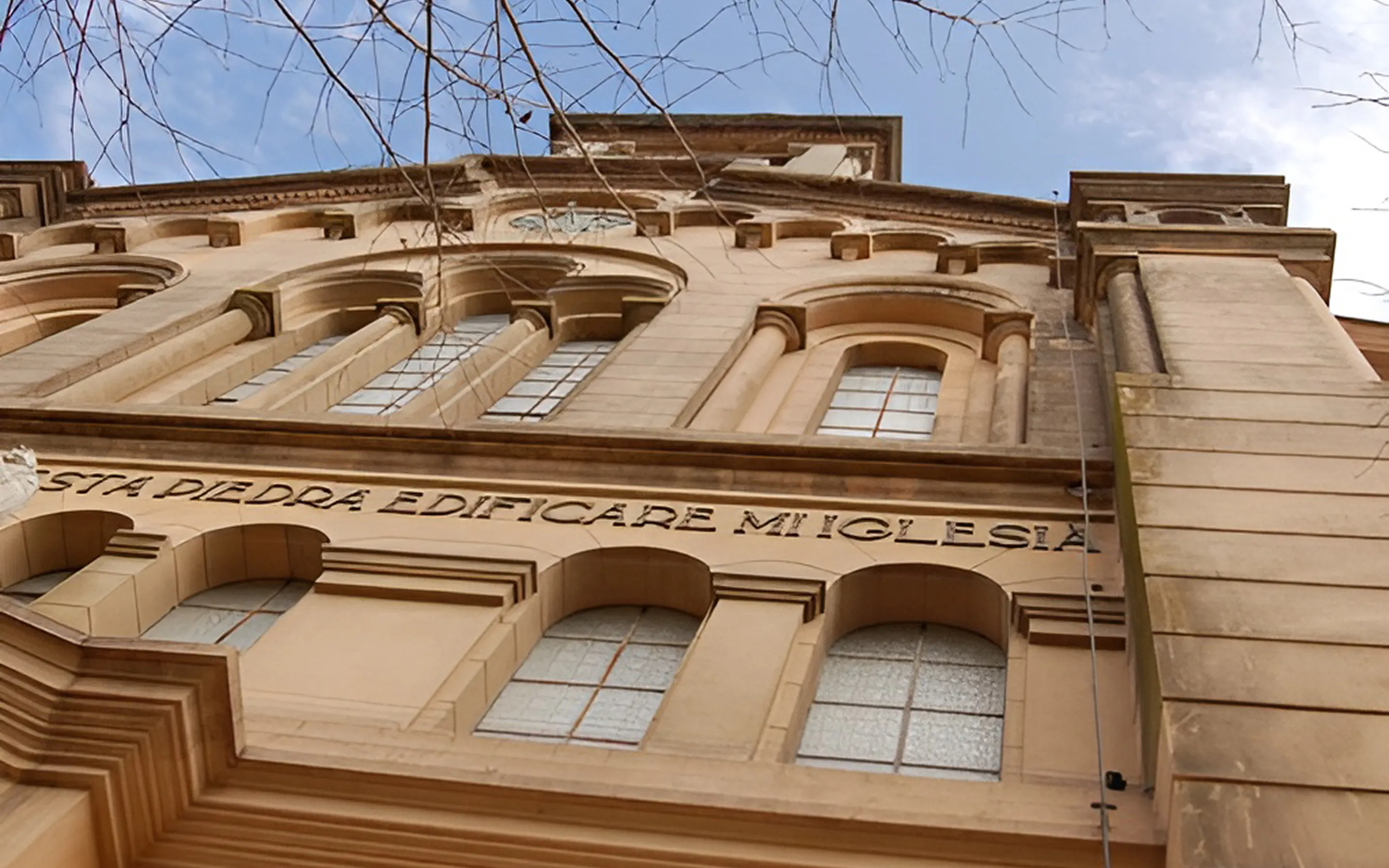
Following a fire in 1967, only the facade and the entrance portico remained standing. The restoration was tasked with addressing only the nave and the presbytery. The existing facade and the interior volume suggested the final solution: a basilica-style church featuring a central nave flanked by two lower side aisles. The wall bridging the height difference between the aisles and the main nave was treated as a large pre-compressed beam, a hybrid of brick and concrete.
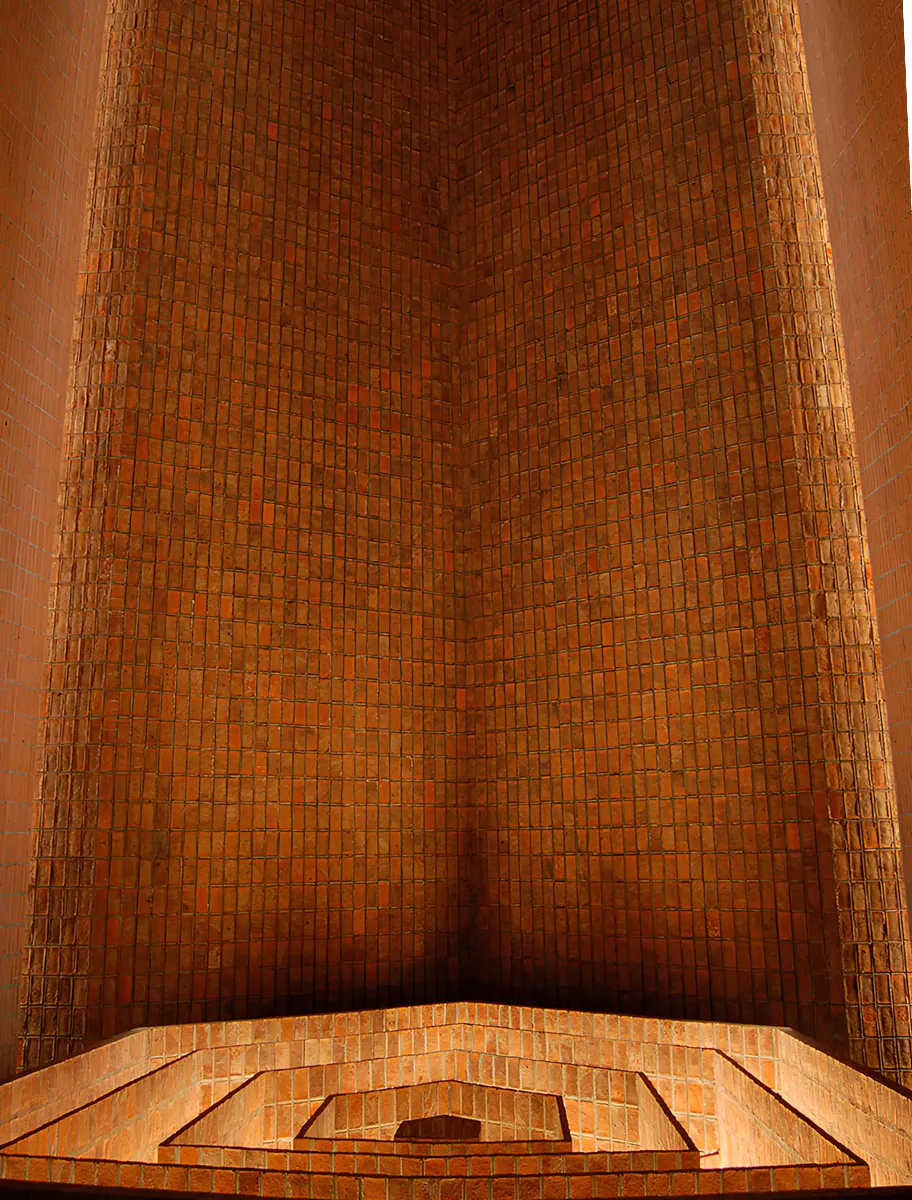
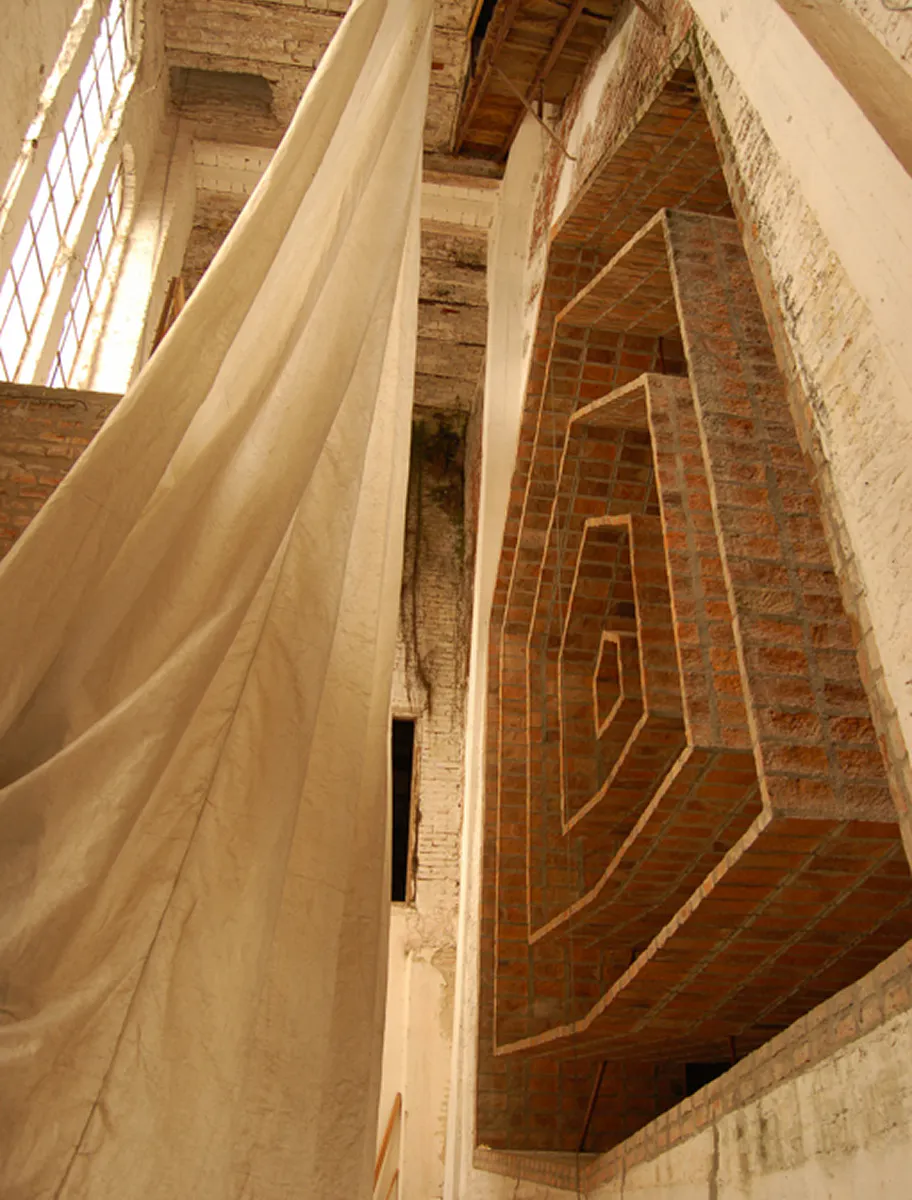
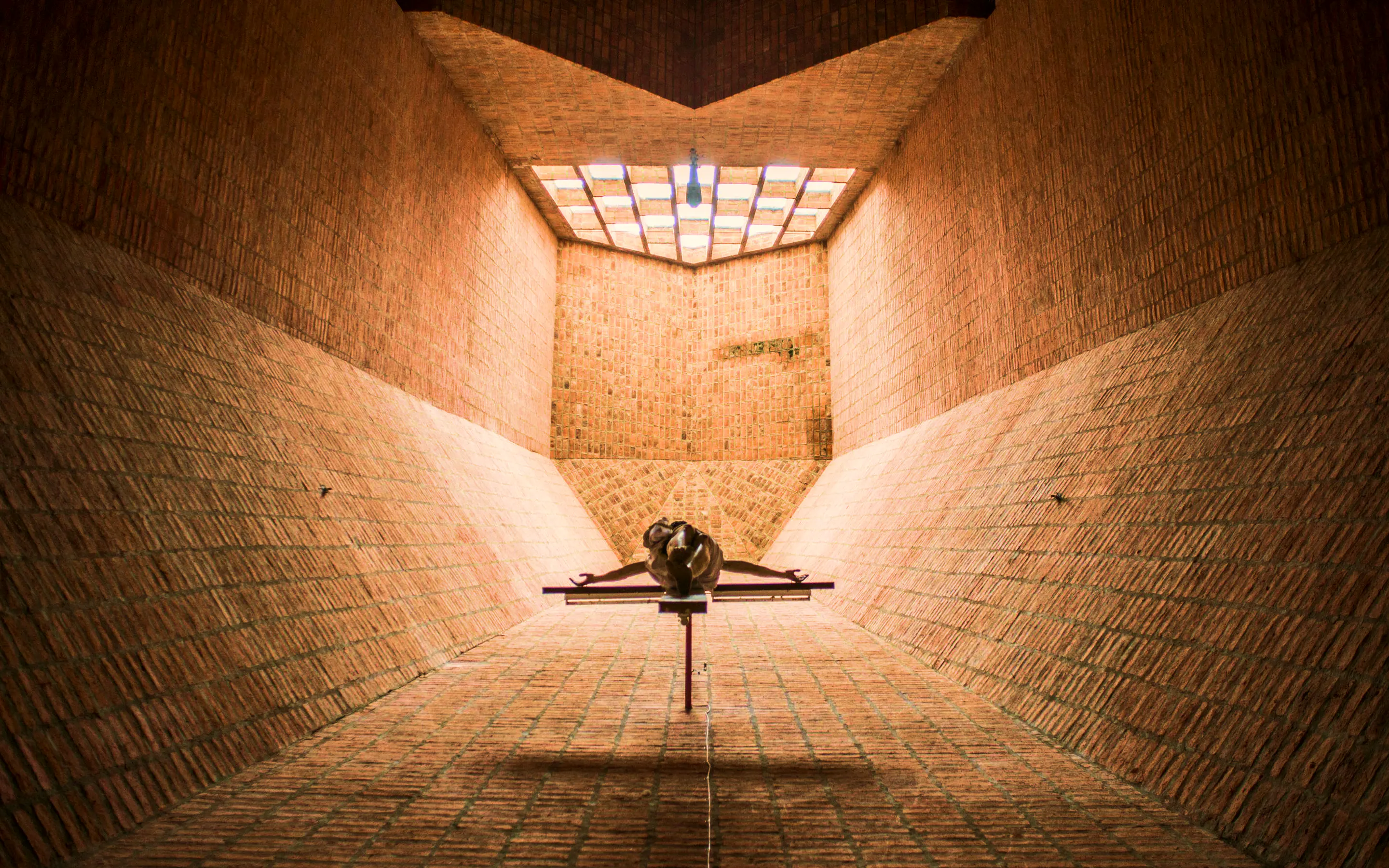
The presbytery takes the form of a tower with a semi-octagonal floor plan, where two sides extend directly from the walls of the main nave.
This early work by Dieste was born from his profound religious conviction; it seeks to architecturally express the very essence of ritual while responding with clarity and feeling to the needs of the congregation.
"The restoration requested of us was to cover only the nave and the presbytery. The existing facade and the proportions of the nave guided our approach: a basilica-type church with two low side aisles and a central nave..."
The original masonry, which housed the reinforcement necessary to withstand wind loads, was clad in exposed brick to preserve the beautiful existing proportions. The attached pilasters were essential for providing wind resistance to the walls.
"To find the right solution, one must understand that brick, mortar, and iron form a unity just as valid as reinforced concrete. One can later study joint widths or coverings, but its construction proves, irrefutablely, its viability..."
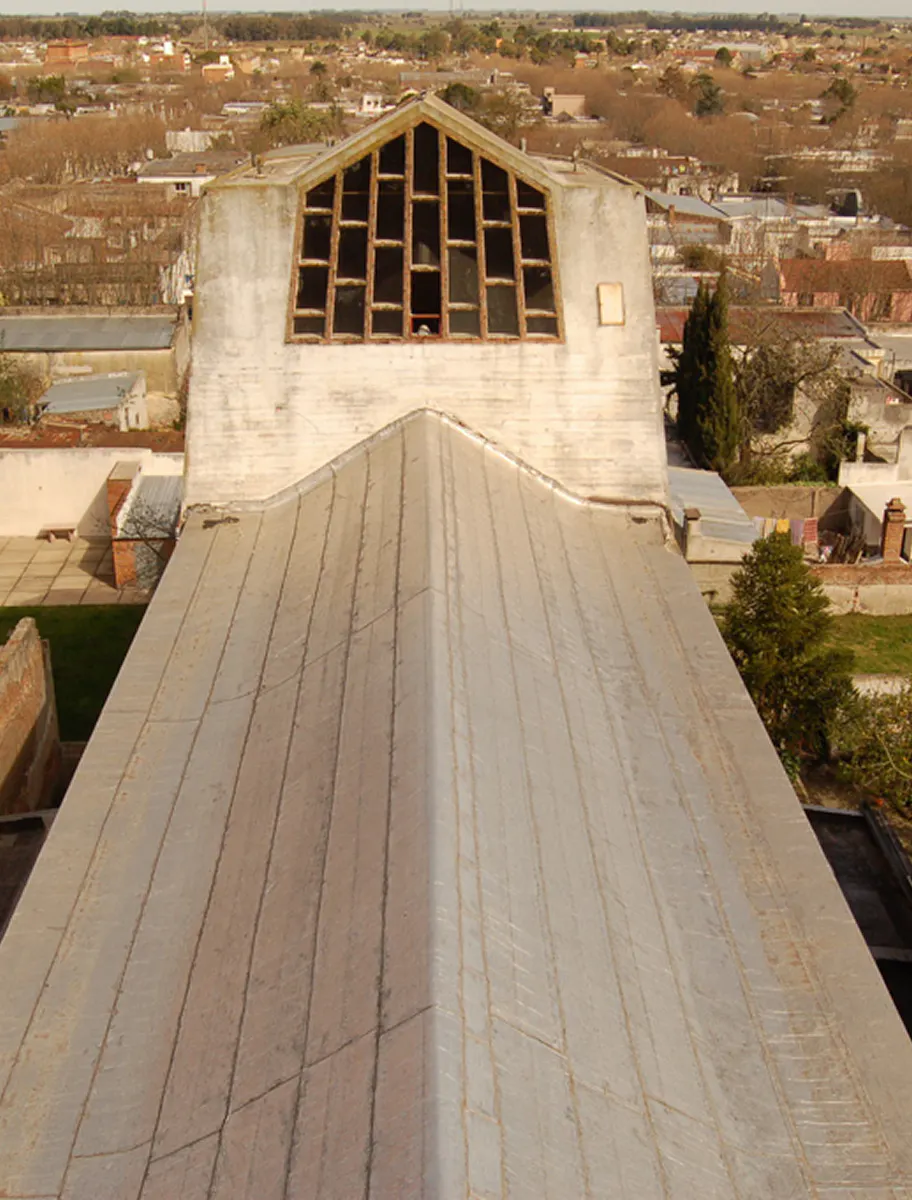
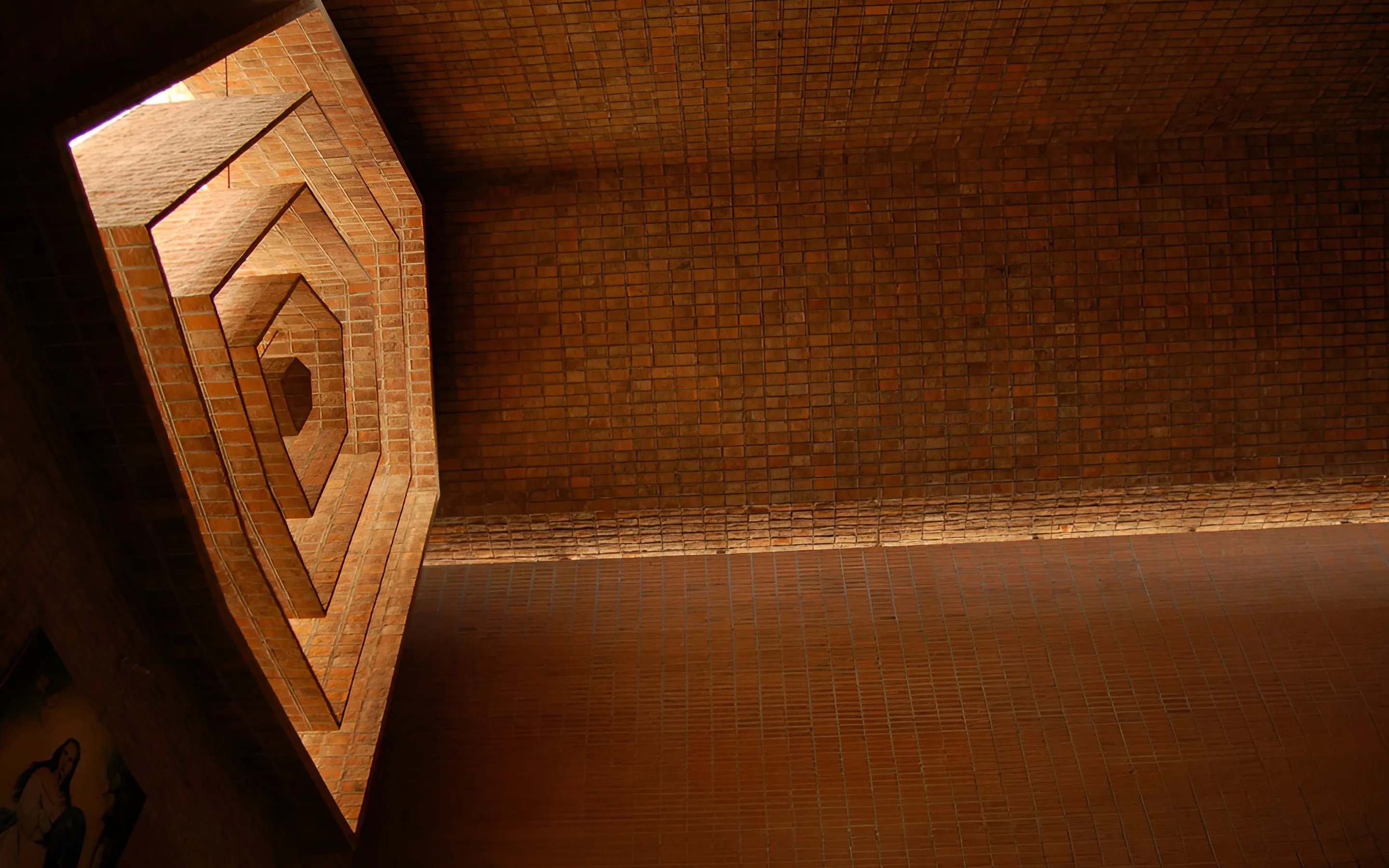
Dieste utilized folded and pre-compressed reinforced brick structures, highlighting the innovative use of the material for its strength, lightness, and warmth. The side aisles were covered with slabs spanning 6.20 m, while the central nave features a folded plate spanning 32 m with a thickness of only 8 cm. The side walls also function as structural beams.
[03]
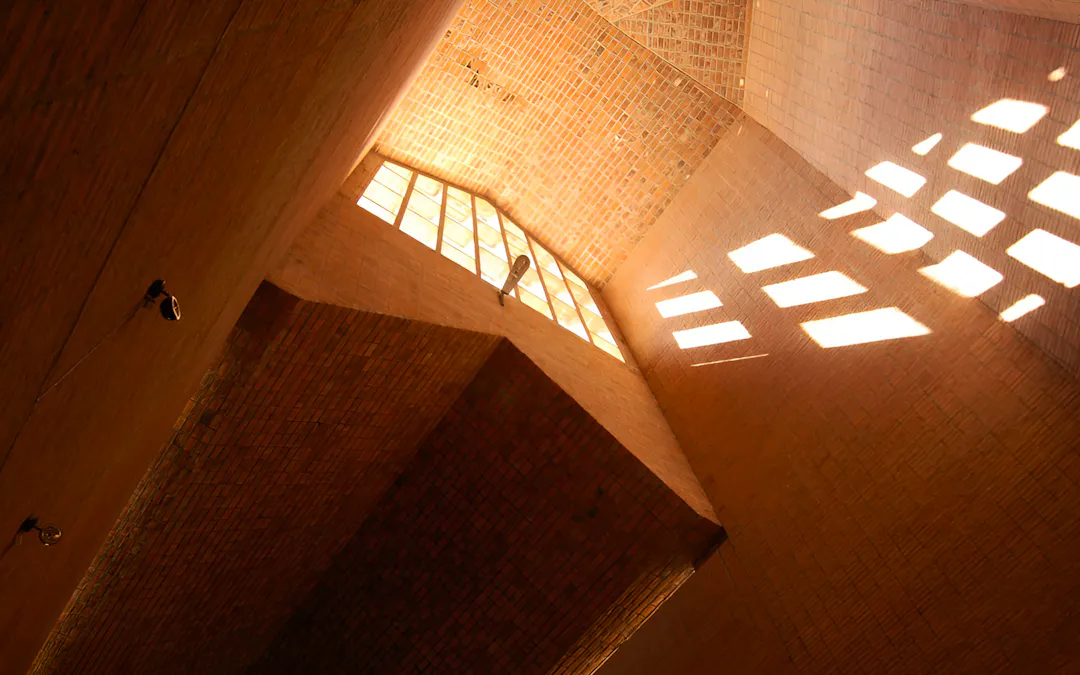
The roof of the central nave is a folded structure, also pre-compressed, spanning 32 m with a thickness of 8 cm. It rests on the masonry of the facade and the entrance portico of the presbytery.
[02]
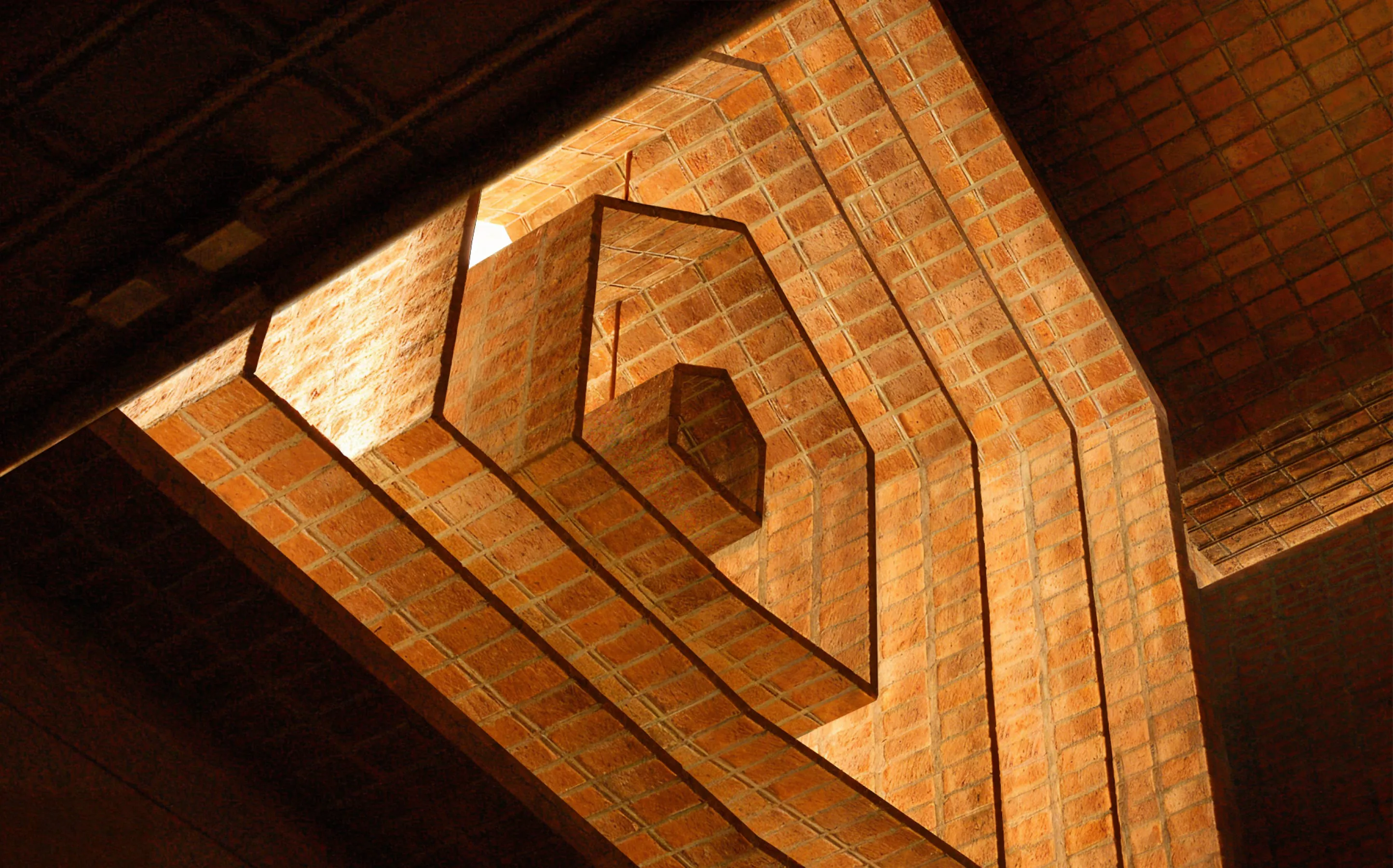
To manage the load transmission of the rose window, Dieste directed the weight through the lower spokes, which worked under compression and risked buckling. To stabilize the system, he applied tension to the upper spokes by cutting, heating, and welding them. These spokes were anchored to a steel frame located at the joint of the smallest hexagon of the window.
[01]
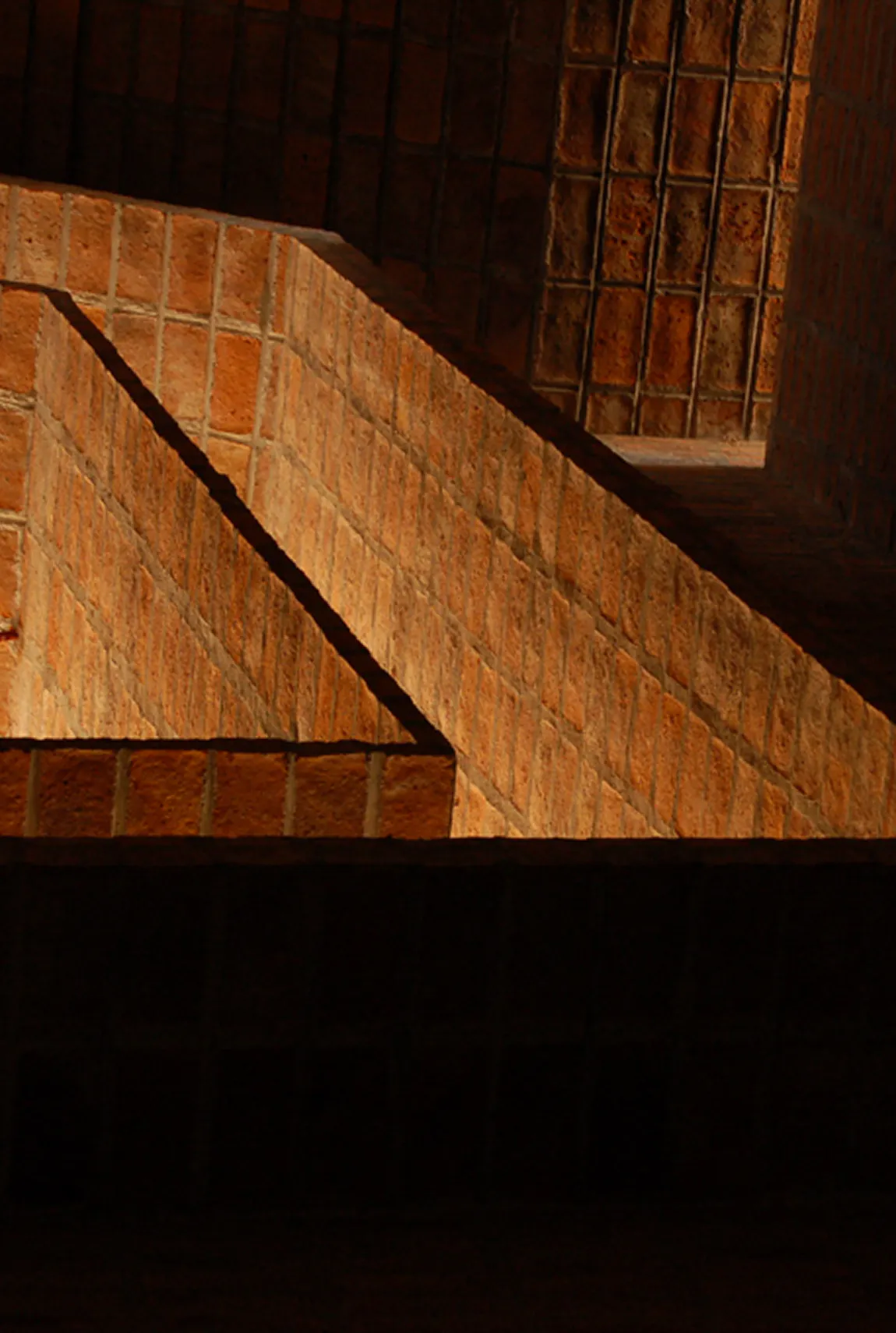
The tower was built upon a platform supported by two thin walls, just 11 cm thick, with minimal reinforcement. The presbytery is crowned by a polyhedral dome. On the north side of the tower, a large brick rose window was opened; it is lightweight and lacks a metal frame, with the glass panes set directly into the masonry.
→ Location: Jose Batlle y Ordóñez 622, Durazno, Uruguay
“I then designed a reinforced concrete portico that would transfer the weight of the bell tower to the old walls, building something upon them that would leave behind a final image that was noble, even exultant.”