Church of Cristo Obrero, Atlántida
→ 1958
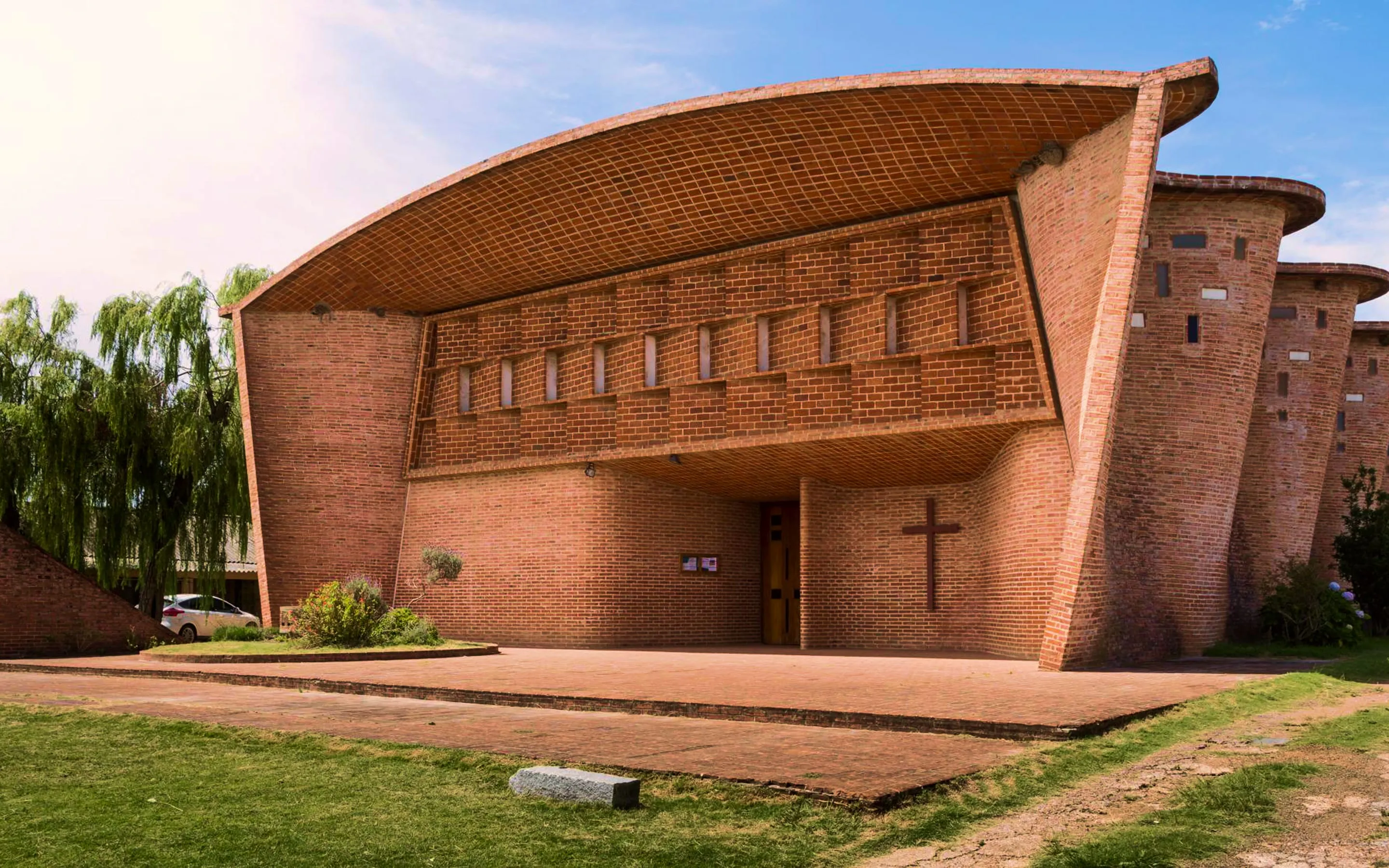
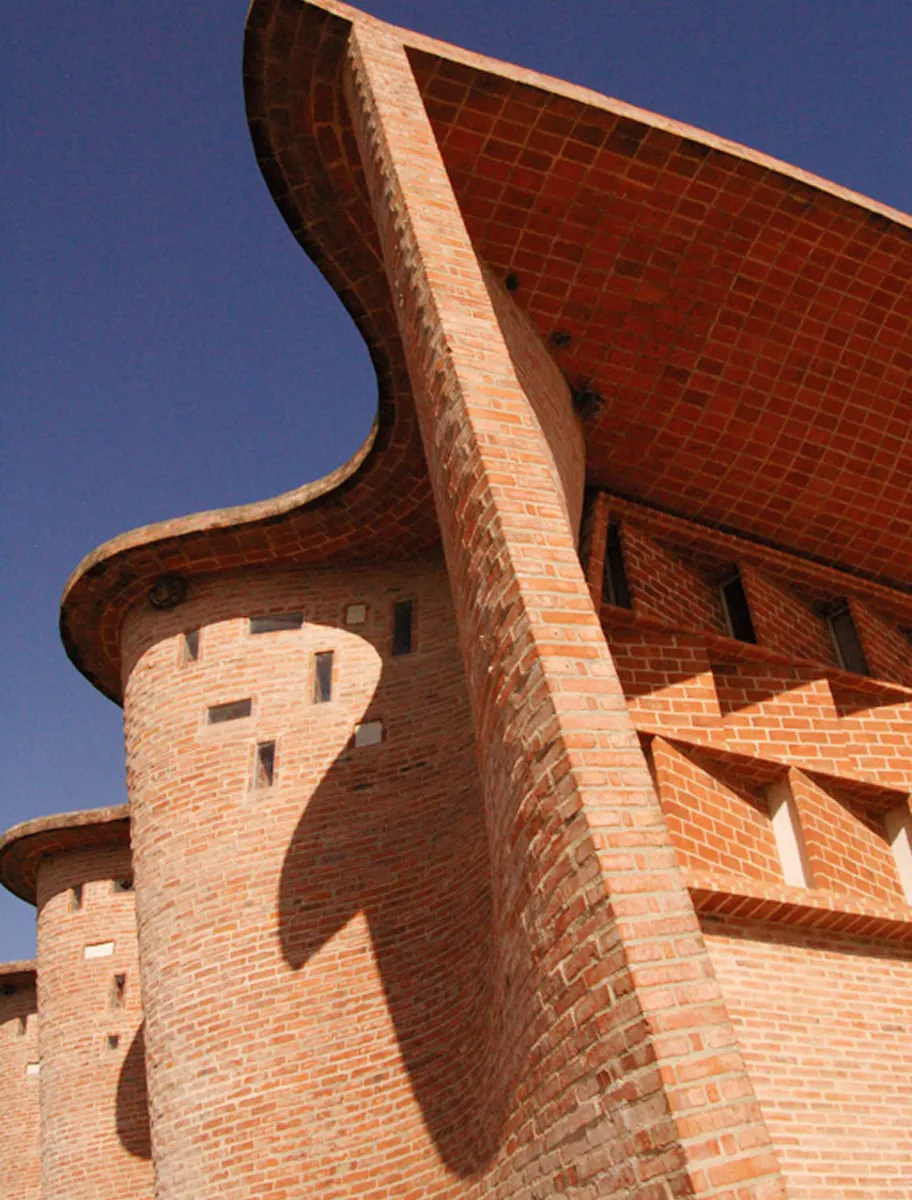
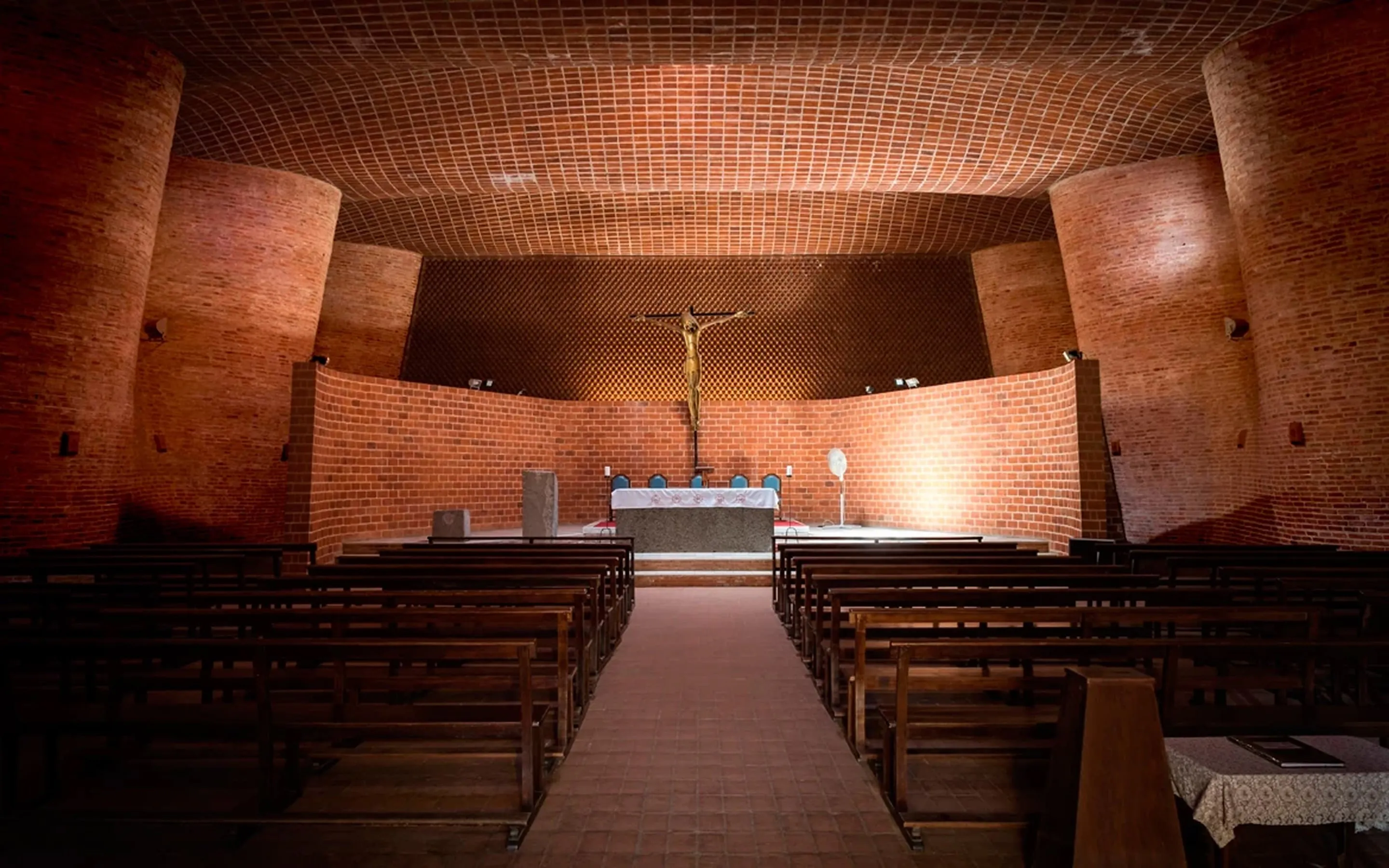
Upon entering the Church of Atlántida, it can be perceived that architecture can be deeply moving. The dynamic interplay of curves in the walls and roof, the delicate treatment of light, and the masterful use of brick offer a singular experience in the perception and use of space.
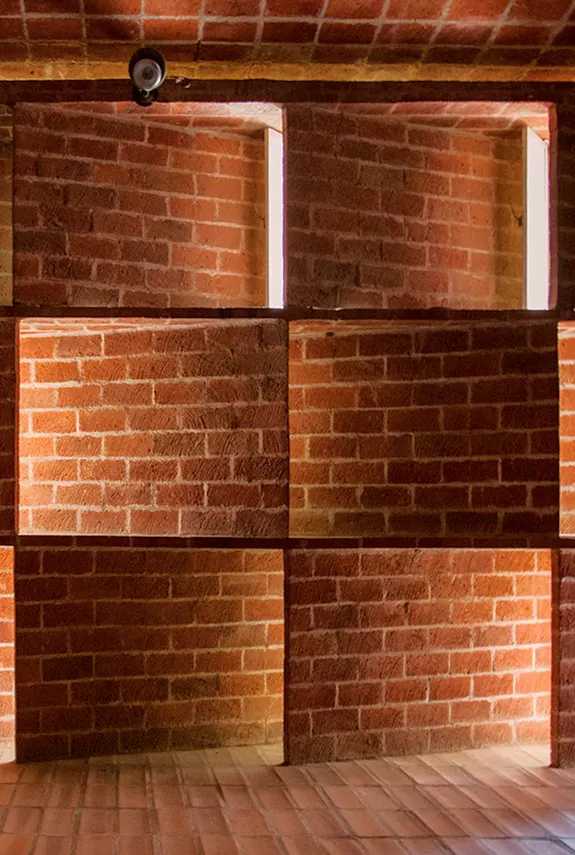
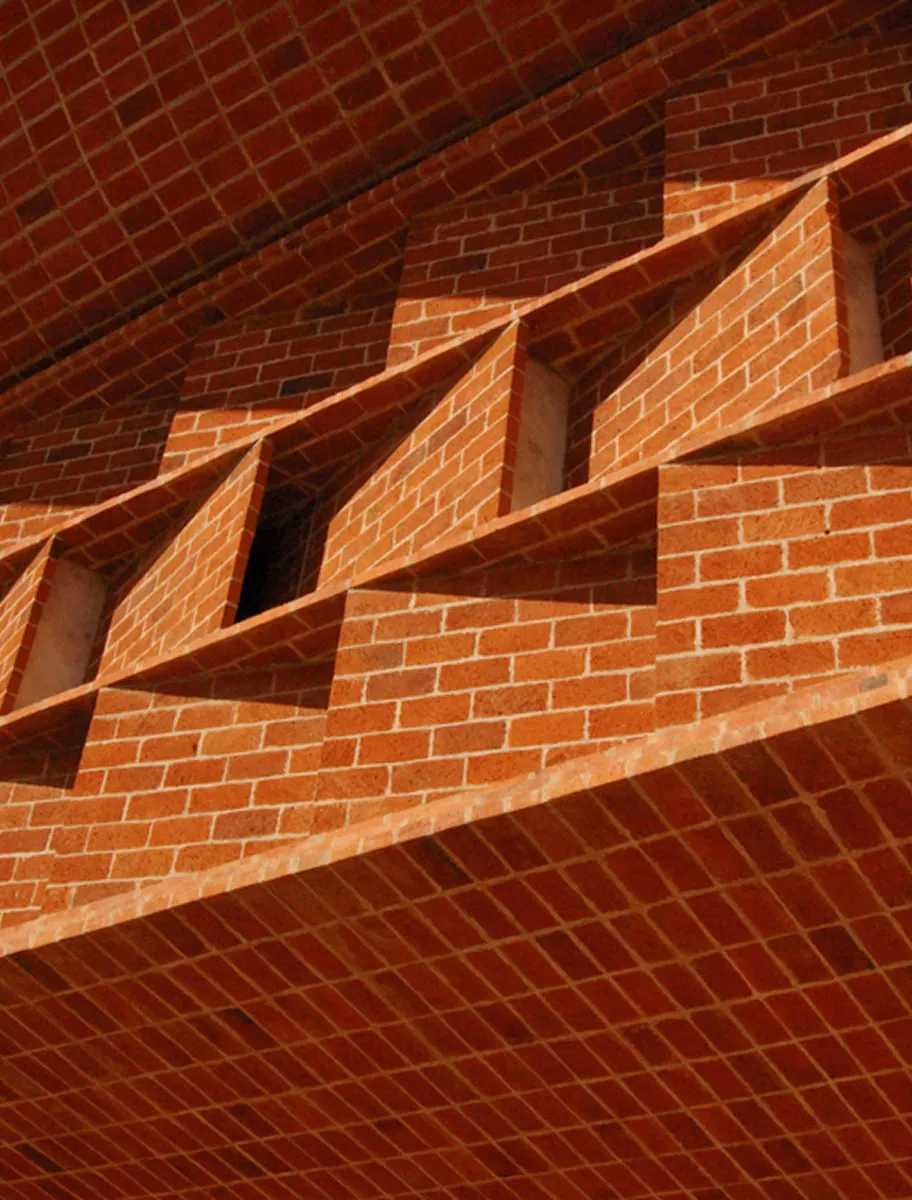
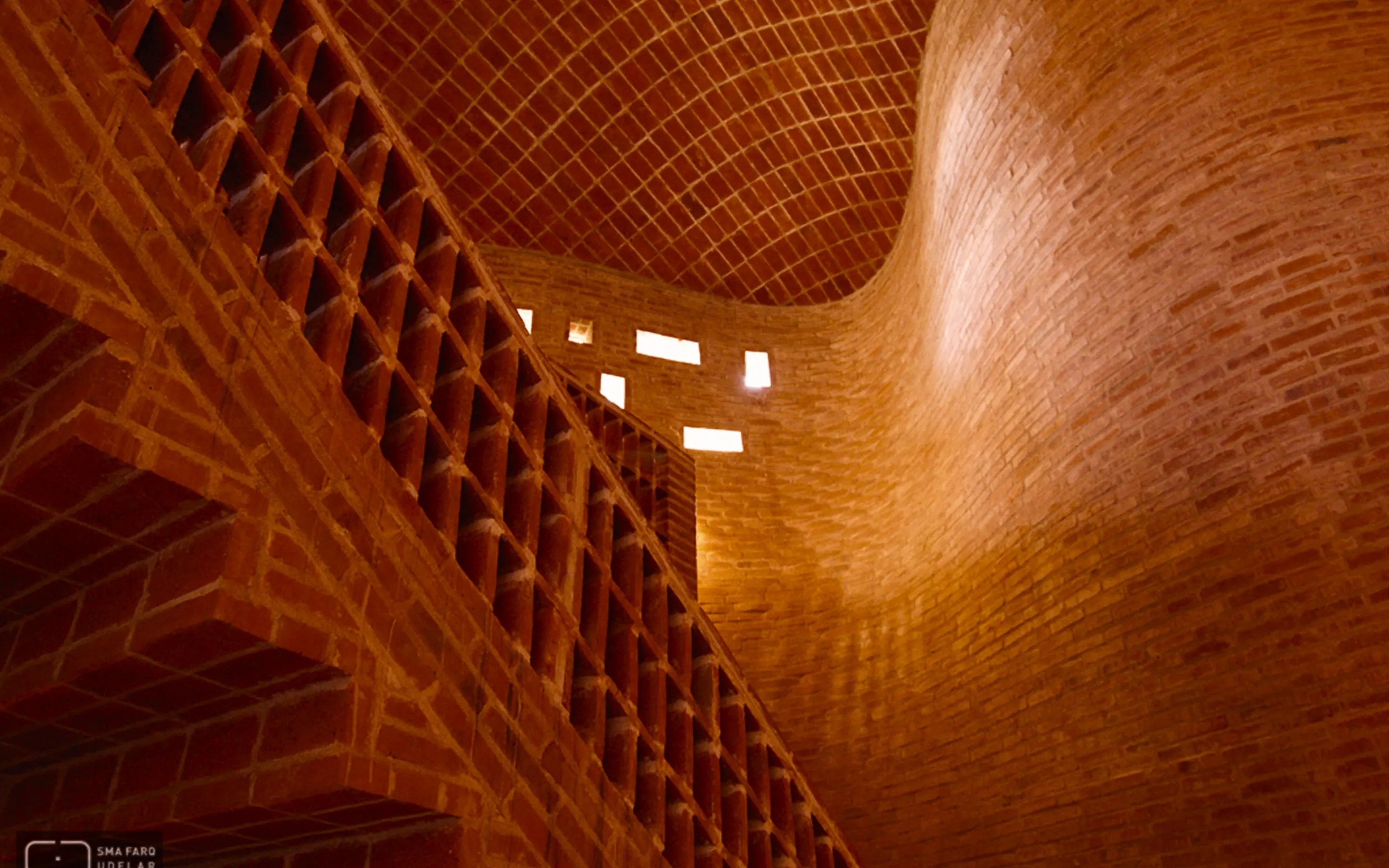
Brick takes on a central role. At the back of the presbytery, a rough wall of interwoven bricks, lit from below, defines the interior space without an abrupt boundary. At the same time, the perforated wall enclosing the choir connects the interior with the exterior through subtle plays of light.
Dieste, nicknamed “the master of brick,” conceived this church as a space of deep spirituality and closeness to the congregation, distancing it from traditional monumentality. He himself considered it “his School of Architecture” and a work that changed his life.
“In the design of this church, …I sought a style that would be both austere and gentle in its piety, with great trust in the Christian spirit of the humble people who would use it… So that the church, as architecture, would not be an obstacle to true devotion but its first expression.”
The idea for the church arose from a commission with a limited budget, which led Dieste to devise creative and economical solutions using simple, accessible materials. His approach focused on “structural reasoning” and the “rational and economical use of materials,” demonstrating that austerity can produce great aesthetic beauty.
“It seemed to me -and it still does- an aberration for the church to belong only to priests, to ‘specialists’; either it belonged to everyone, or it betrayed its communal essence… The church was conceived so that everyone would feel collectively involved as participants in the liturgy.”
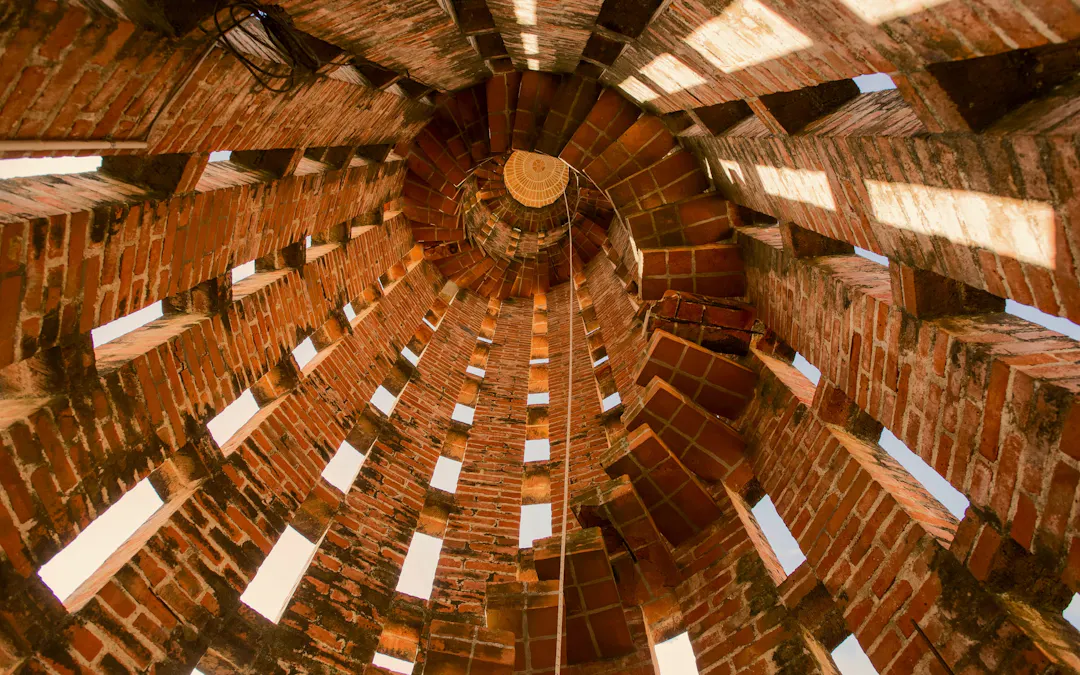
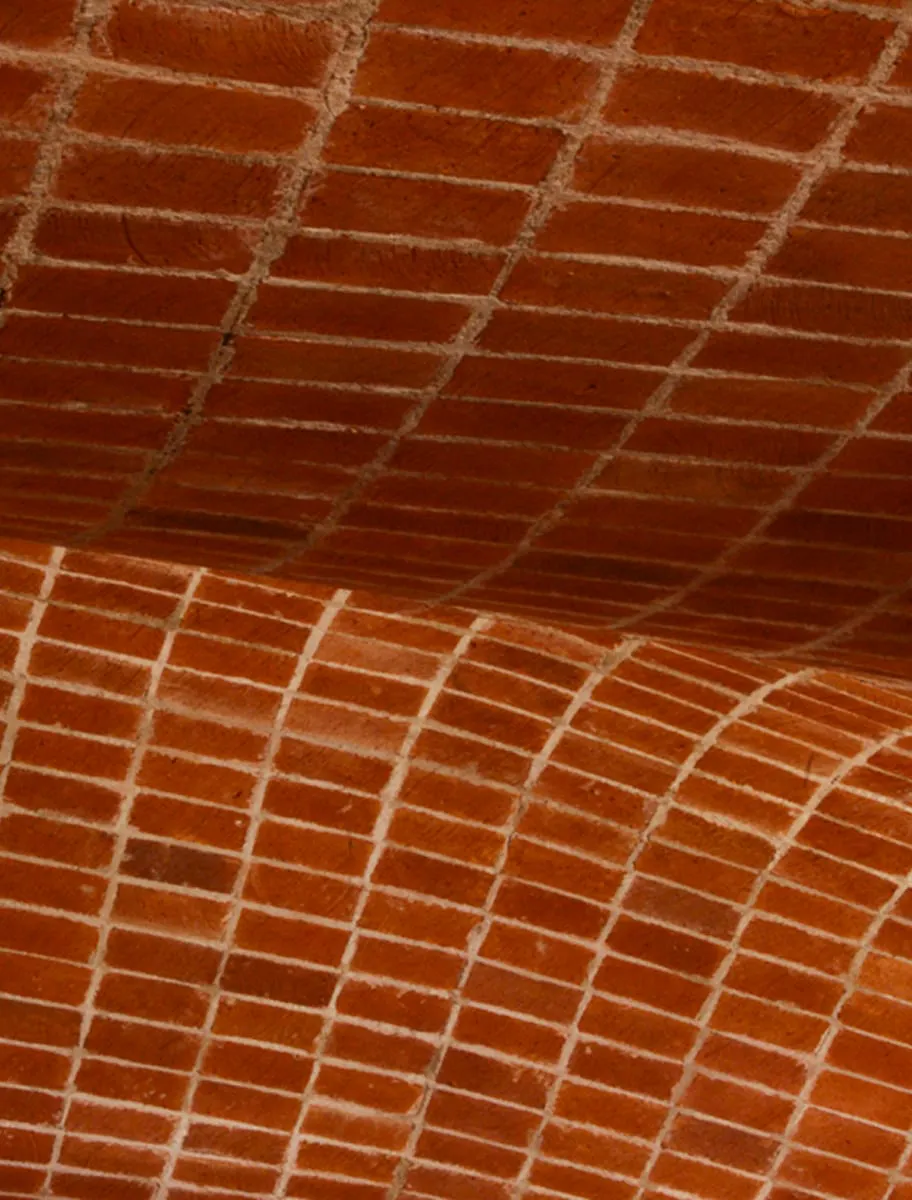
Brick is the primary material, chosen not only for its strength but also for its expressive value. Dieste worked with it sensitively, seeking to pay tribute to the humility of the faithful. The textures created by its arrangement enhance each area and bring warmth to the space. Light, a key element in Dieste’s work, is meticulously designed in the Church of Atlántida to intensify the warmth and emotional impact of the interior, creating an intimate and contemplative atmosphere.
[03]
The roof was built using a movable formwork on which the vault was shaped in 6-meter sections, and therefore reused six times. The removal of the formwork followed standard local construction practice, taking place the day after each section was completed.
[02]
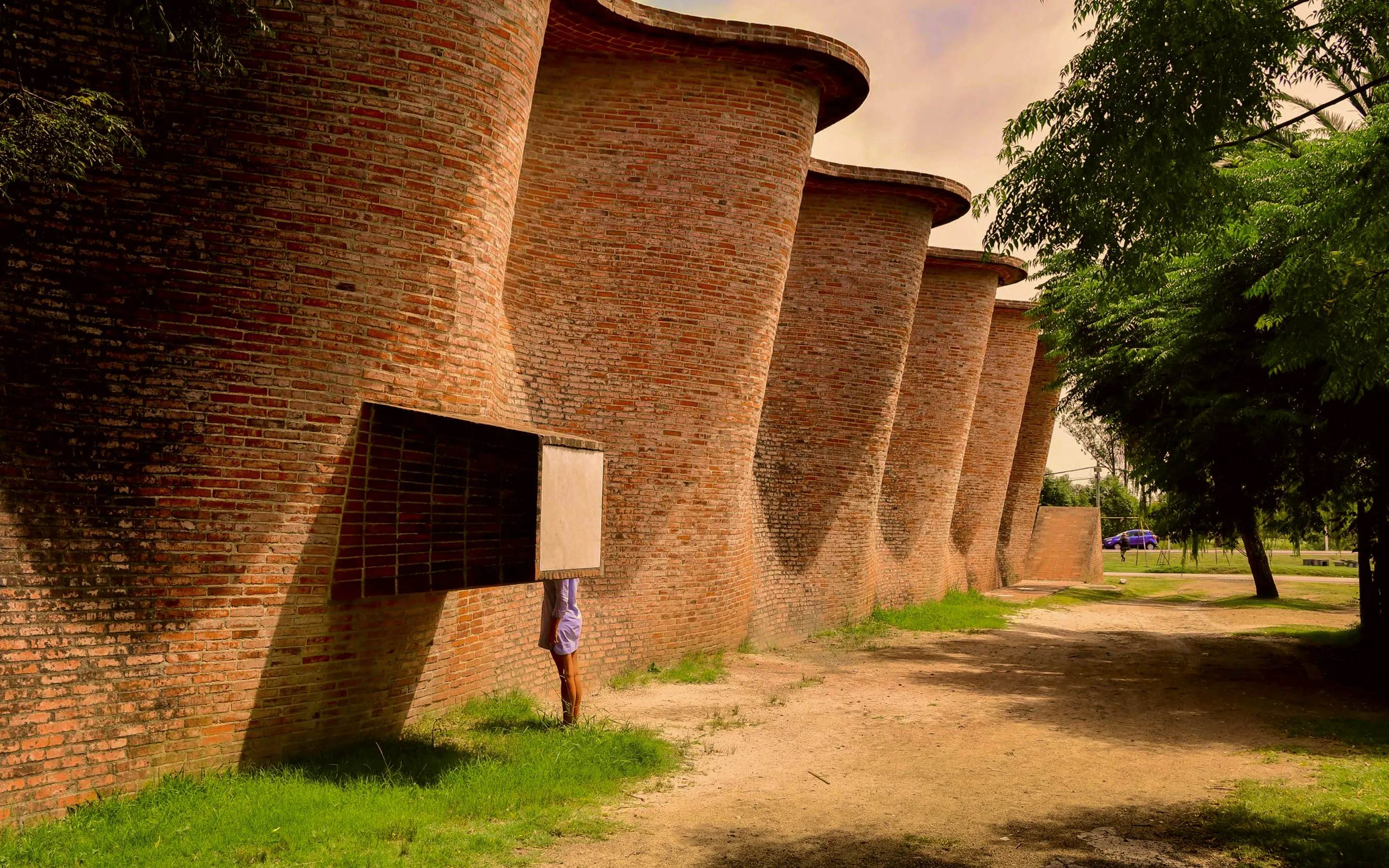
Each wall is composed of a series of conoids with straight directrices at the base and an undulating form at the top (a parabola and two half-parabolas joined by a wave). For their construction, the ruled surface was defined in advance using steel wires fixed to the guiding lines.
[01]
The communion rail is integrated into the presbytery, raising the faithful by one step at the moment of communion. In this way, the congregant enters the presbytery, embraced by its walls and standing on its own floor. Light, deliberately arranged, comes from the back and concentrates on the figure of Jesus, emphasizing his presence.
→ Location: Route 11, Km. 164, Estación Atlántida, Canelones, Uruguay
“I did not make this effort so that tourists would come to visit it, nor for it to be published in foreign magazines; I did it as a believer, building a temple for other faithful people like myself.”