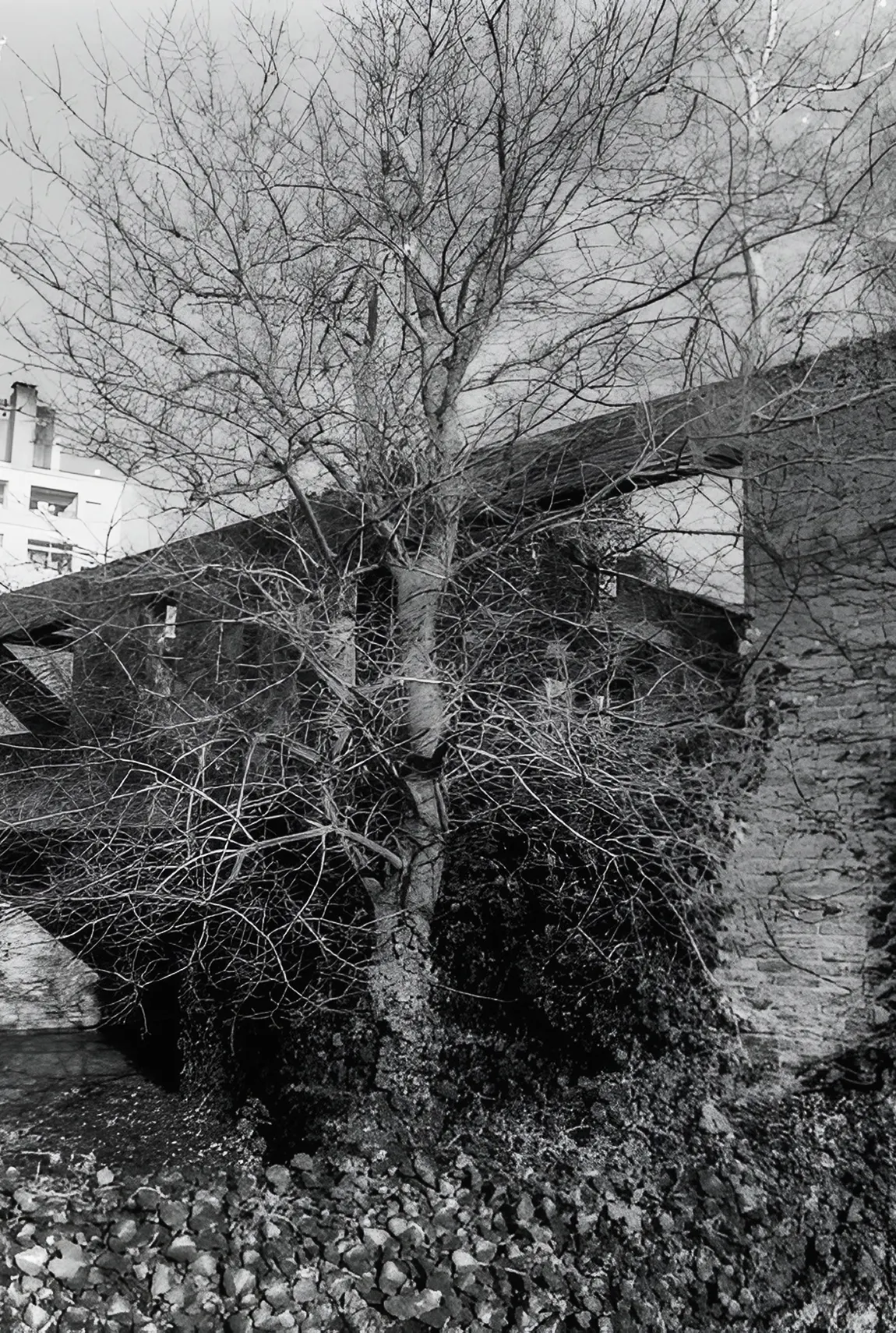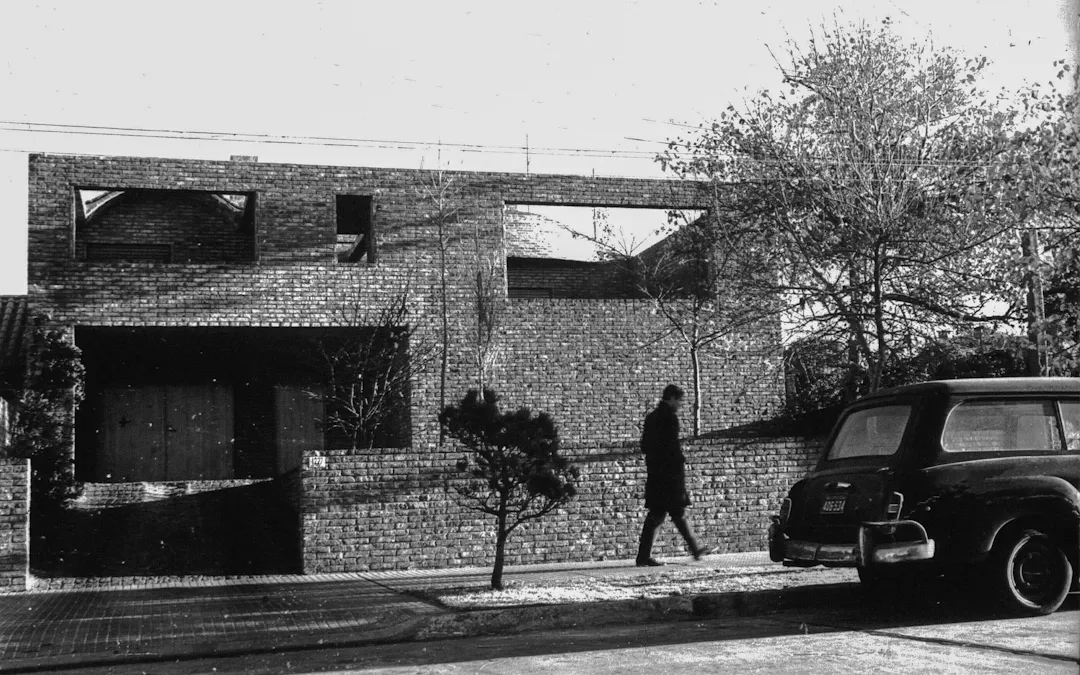
Eladio Dieste House, Punta Gorda
→ 1962
Designed by Eladio Dieste himself for his family, this house was conceived to meet the needs of a large household: the parents, eleven children, and a domestic worker. Its spatial organization was based on a series of key premises outlined below (not as a hierarchy of priorities, but rather as a guide for analysis).
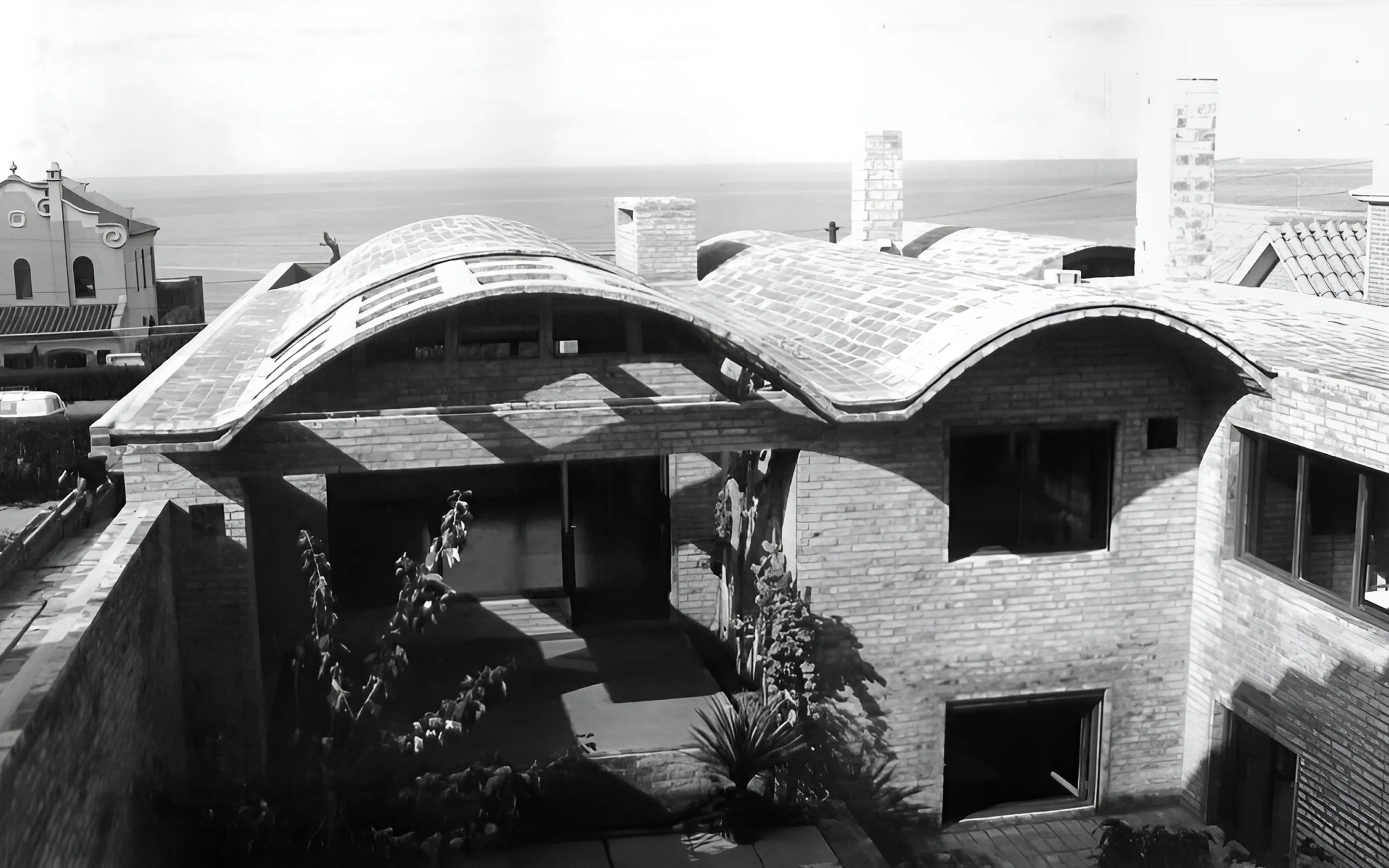
The house sits on a 12-by-50-meter plot oriented northwest–southeast, taking advantage of a 10% slope that descends toward the coast. Thanks to the topography and a pronounced drop beyond the front street, the house enjoys an unobstructed and privileged view of the sea.
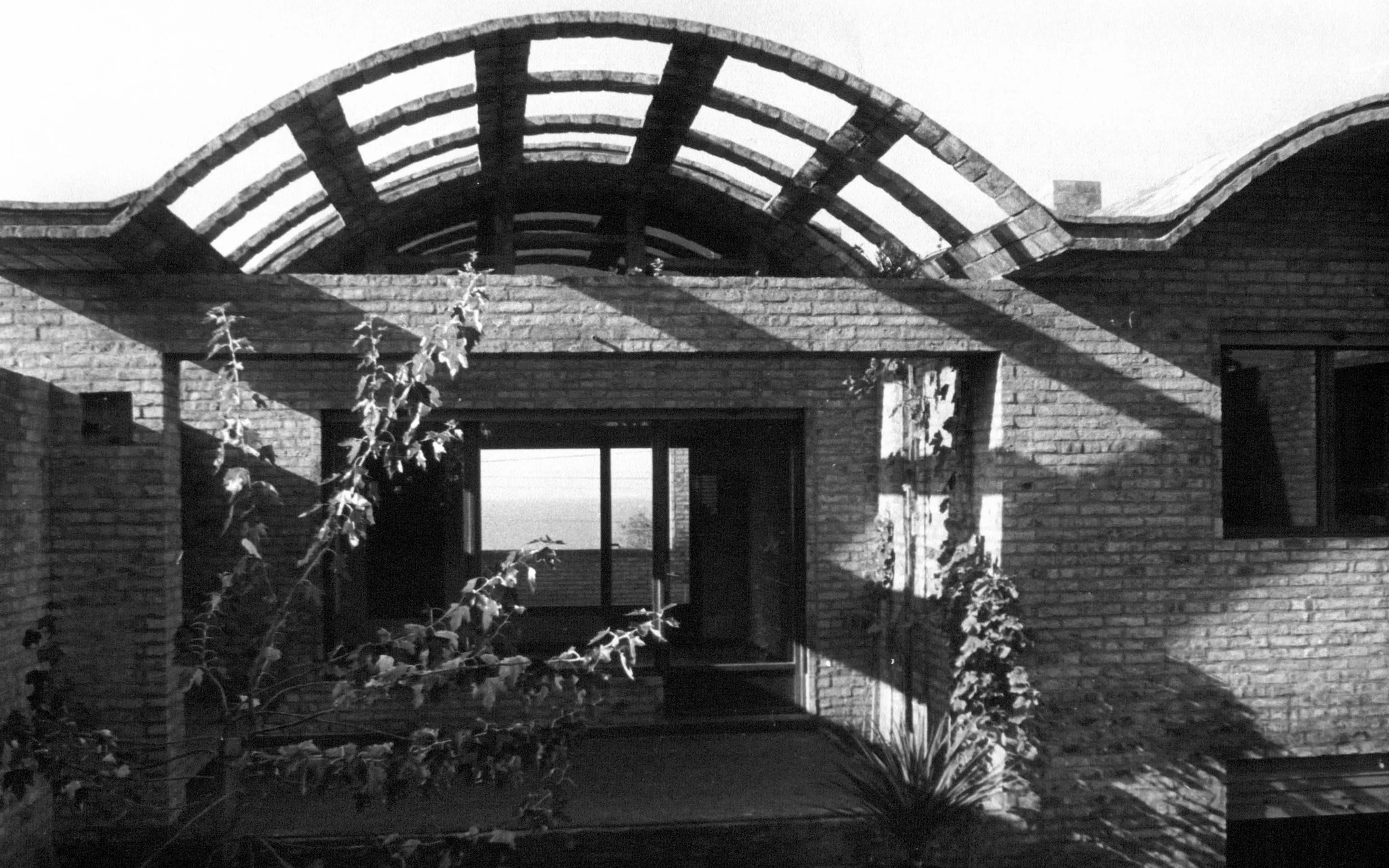
Natural climate control was prioritized through the use of overhangs, trees, and deciduous vegetation. One example is the perforated brick pergola in front of the living area: its climbing plants provide shade in summer while allowing sunlight to filter through in winter.
"Seeking to have interior environments open onto outdoor spaces that extend them, so that without a large built area, and therefore at a low cost, one achieves a sense of spaciousness and nobility."
The slope was used to create an almost continuous main floor, with a difference of only three steps. The entire plan was not raised to an upper level in order to preserve light in the central courtyard and to avoid burying the lower bedroom too deeply.
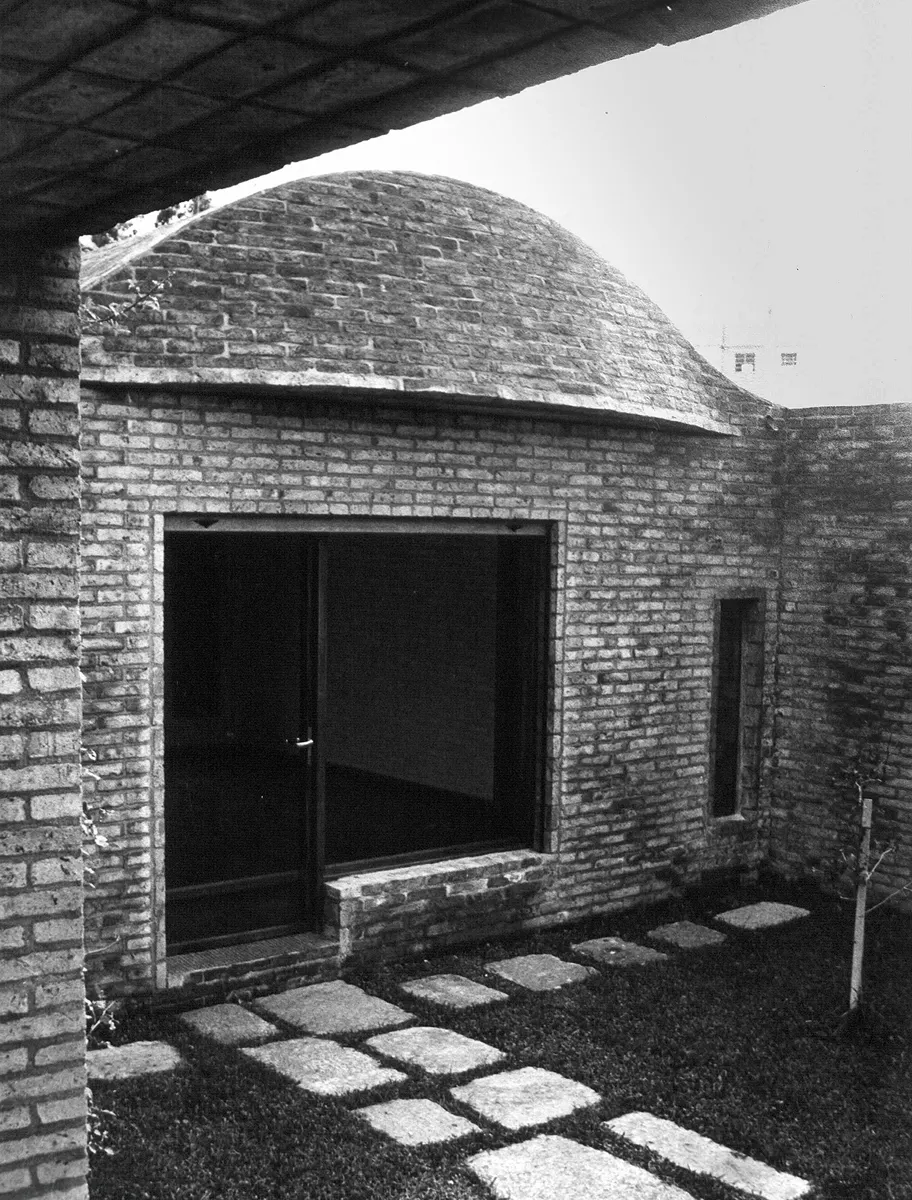
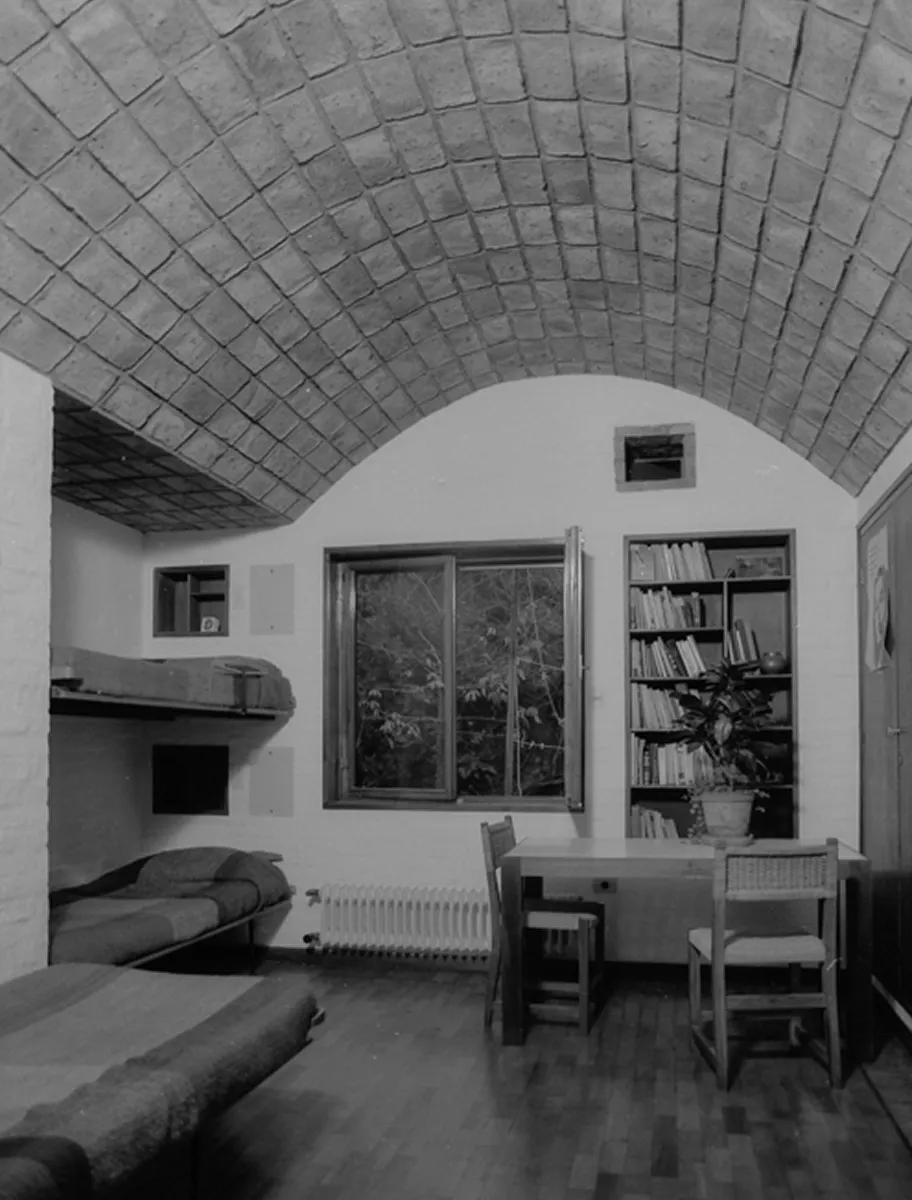
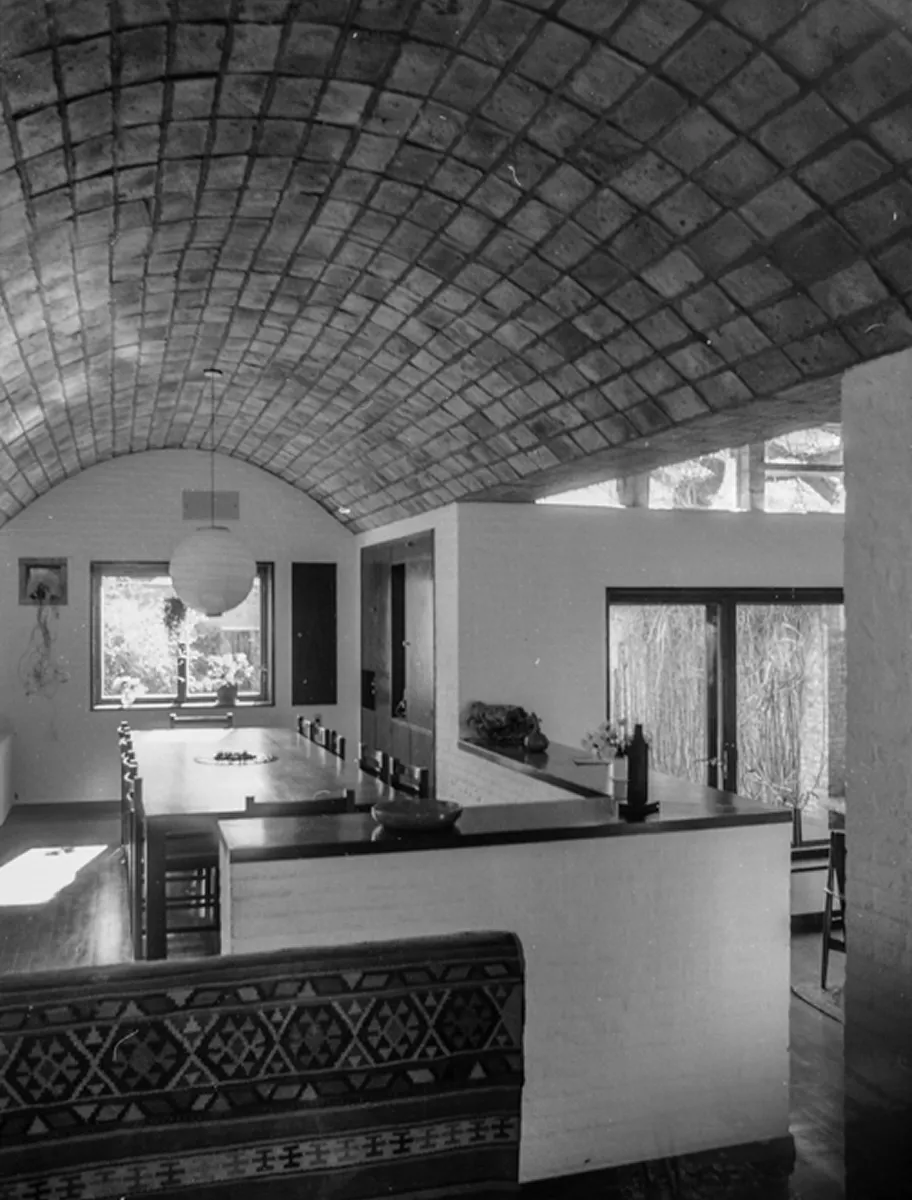
The design sought, above all, to capture views of the sea without sacrificing the intimacy and sense of retreat of the home, achieving a balance between openness to the landscape and domestic protection.
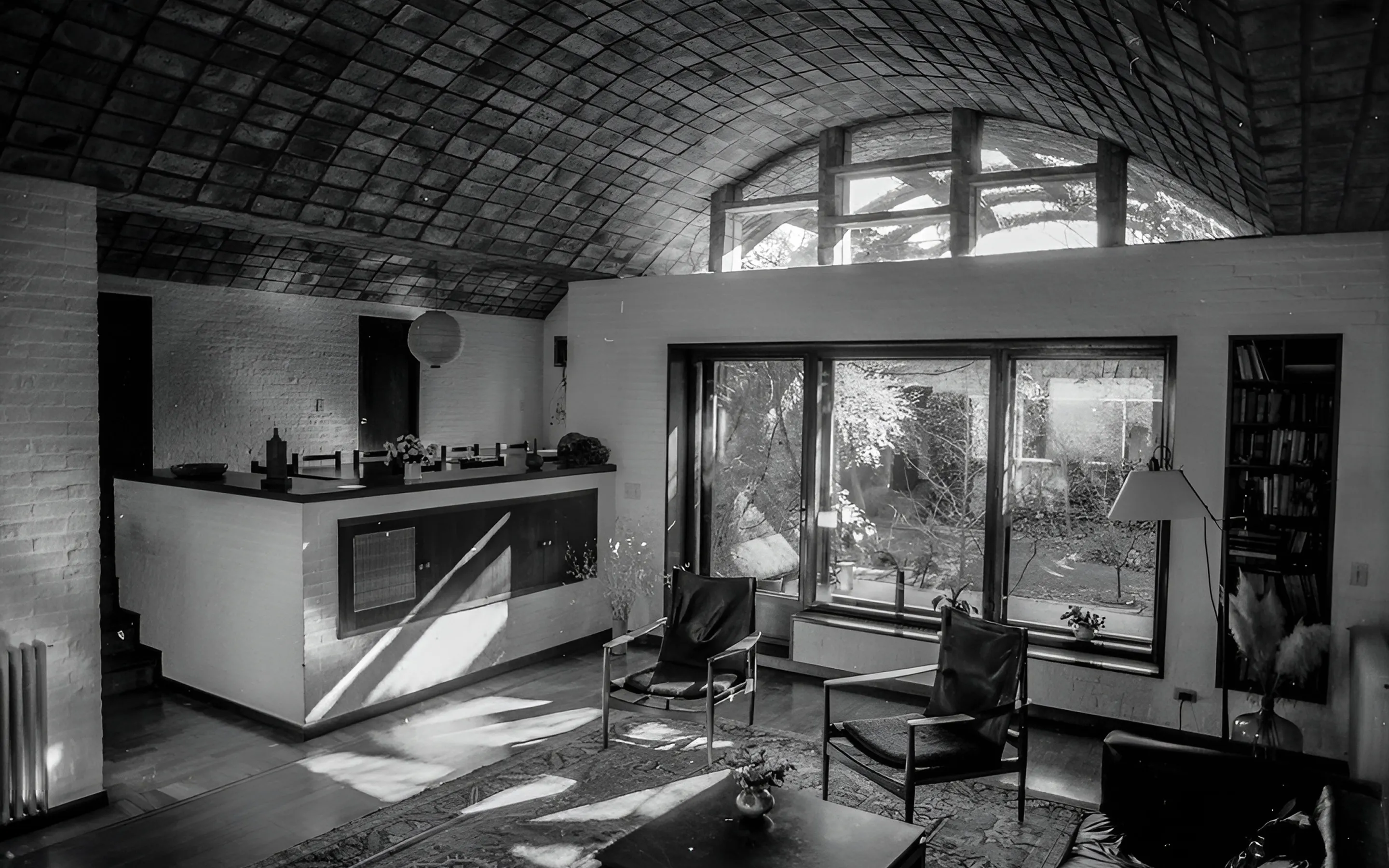
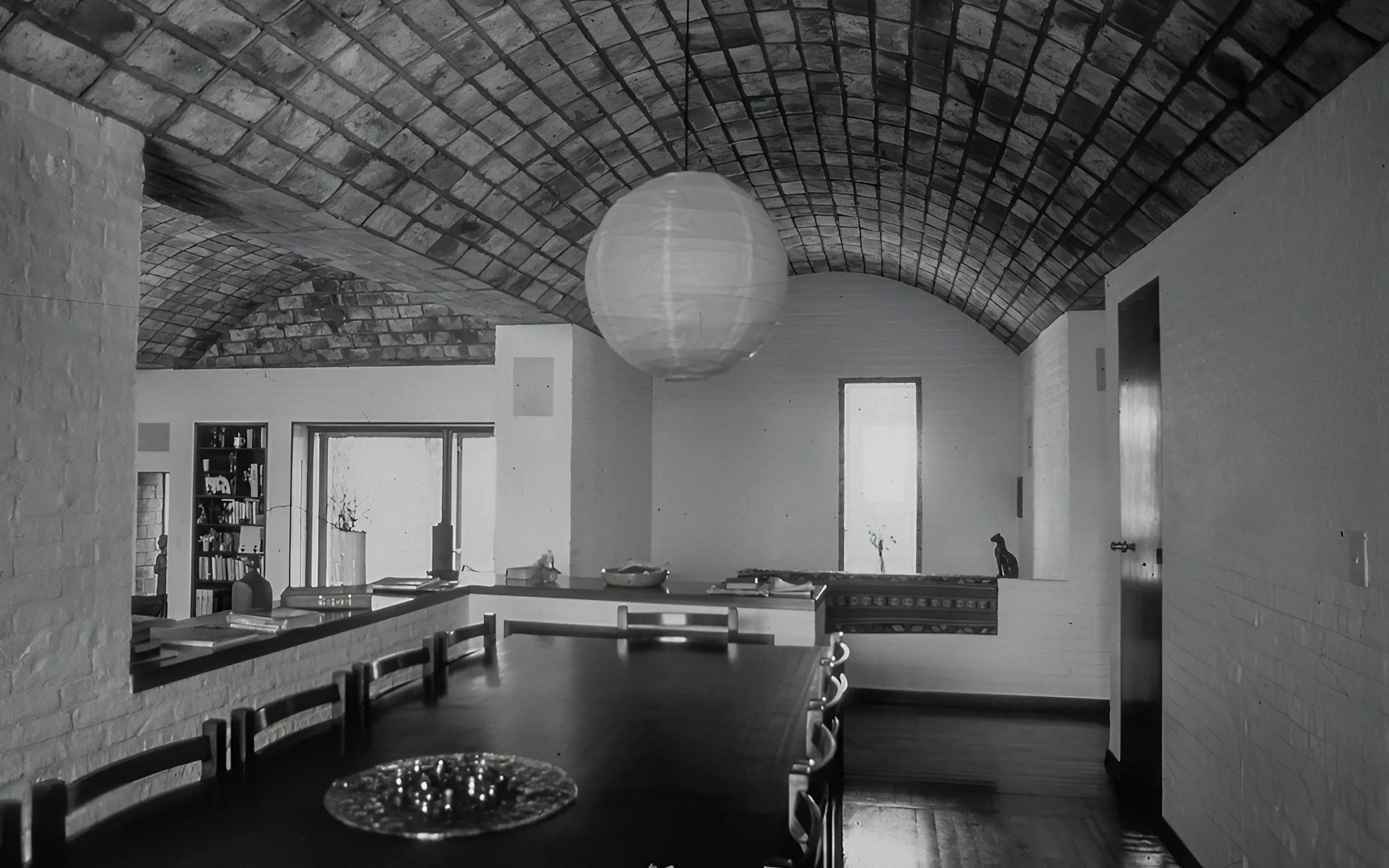
To this end, all rooms were oriented toward the north or northeast. Rather than designing a single large living space divided only by furniture, the project multiplied areas for shared living. This more complex structure—comprising a dining room, a common living area, and a study, all connected yet independent—allows inhabitants to choose between social interaction and privacy, offering a spatial flexibility that adapts to different moments of the day.
[03]
To accommodate the eleven children according to age and gender, four bedrooms were required—more than could fit within the width of the plot. As a result, the bedroom for the four eldest children was placed on the ground floor and lit by an English courtyard, avoiding the need for an upper floor that would have complicated circulation and altered the scale of the interior patios.
[02]
For Dieste, openness to the exterior had to be balanced, calling into question the excessive use of glass in modern architecture. He argued that large glazed surfaces not only increase the cost of thermal conditioning in a temperate climate such as Uruguay’s, but more fundamentally, they dilute the sense of shelter that a home should provide. For this reason, openings were carefully measured, prioritizing an ancestral sense of protection and refuge.
[01]
Beyond the natural surroundings, Dieste sought to enrich the “human landscape” by encouraging visual contact among the inhabitants. For him, architecture should enable family members to see one another across different spaces, based on the premise that human connection is what truly gives meaning to views of the sea or the stars.
→ Location: Mar Antártico 1227, Montevideo, Uruguay
“Suffice it to say that, for strictly rational reasons of construction economy, quality of environmental performance, and level of finish, it is very difficult to build a house of this kind using a material more suitable than brick.”